What is Wind Farm Repowering?
Last Updated: March 14, 2026
Share:
There are a lot of potential constraints when it comes to constructing a wind farm, including shadow flicker, telecoms, and aviation safeguarding and radar limitations. As well as lengthy planning processes, these constraints can be costly financially and in terms of meeting planning and construction deadlines. Luckily, there is a way to reduce these whilst increasing the global MW output.
Repowering a wind farm means dismantling the existing turbines and replacing them with newer models that are able to generate more power without needing to use up more land.
What are the Benefits of Wind Farm Repowering?
- Reduces required land mass for renewable energy
- Decreased disturbance of ecology and biodiversity due to reduced land mass requirement
- Fewer constraints to assess, as the land is already being utilised by turbines (some assessments will still be required)
- Sites already have an established grid connection
- Reduces need for site-selection processes
- Reduces overall cost of the project compared to building a new wind farm
- Can increase community benefits with the increased MW output
Why is Repowering Happening Now?
It has been 35 years since the first wind farms were installed in the UK. In that time, we have made great advances in wind farm technology. Turbines are much larger and more efficient than the original ones installed. By replacing the older turbines, we can generate more power without using any additional space.
Lots of wind farms operate under time limited planning permissions. These time-limits are likely to be expiring in the next few years. Repowering old sites can secure the sites for continued renewable energy usage. If these older wind farms are decommissioned and repowering is not possible, this could actually decrease the UK’s MW capacity.
Regen has estimated that more than half of the UK’s onshore wind fleet (over 3.2 GW) will face end-of-life decisions by 2035 [1]. Developers will be faced with difficult decisions whether to decommission, life extend, or repower. Repowering could add an additional 690MW on onshore wind by 2035, increasing to potentially 6GW by 2050.
Increasing the dimensions (height and rotor diameter) of wind turbines can require further assessments to ensure there are not significant impacts upon amenity and safety. Pager Power can assist with these environmental assessments including shadow flicker, aviation and radar, telecoms, and terrestrial television and radio.
Speak to an Expert
Pager Power’s industry-standard modelling and almost two decades of wind project experience ensure accurate assessments that give stakeholders confidence and help keep projects on track.
Read more about our services for wind here.
References
https://www.regen.co.uk/insights/a-second-wind-unleashing-the-potential-for-repowering
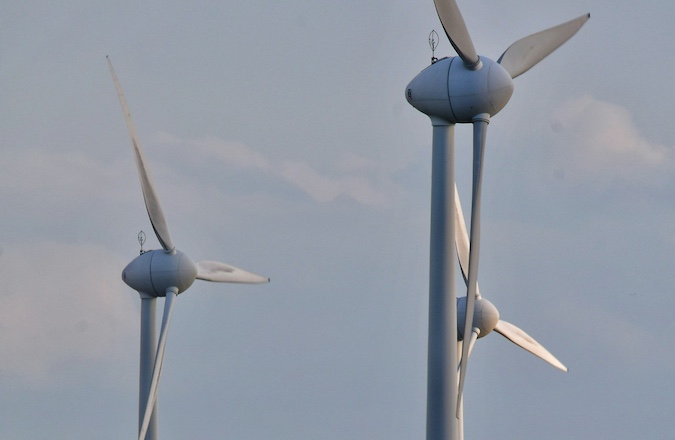
Image accreditation: Peter Steiner (August 2025) from Unsplash.com. Last accessedon 14th March 2026. Available at: https://unsplash.com/photos/two-tall-wind-turbines-in-a-field-lry1at9wpPQ
post contents
About the Author: Hannah Lucey