
Wildlife Hazard Management
Promote safety and comply with guidance by ensuring your development does not create a wildlife hazard to aviation operations.
Why Wildlife Hazard Management Assessment Matters
Any new development on or near to a licensed aerodrome has the potential to attract or change the behaviour of wildlife, which in turn, can create a hazard to aviation safety. These assessments are typically requested by the aerodrome safeguarding team during the planning phase, with the aim of preventing any incidents from occurring and staying ahead of emerging threats.
As per the Air Navigation Order and Civil Aviation Authority (CAA) guidance, aerodromes and developers have strict obligations to maintain aviation safety and reduce risks to aircraft that may be caused by new (or changes to existing) developments. Aerodrome operators also need to demonstrate an understanding of local wildlife risks as part of their certification, which means the aerodrome has a responsibility to ensure any new development does not create a significant hazard.
What Our Assessment Provides
Pager Power’s comprehensive Wildlife Hazard Management Assessments bring together expertise from over 20 years of aviation and ecology. The aims of our assessments and advice are as follows:
- To identify and mitigate the potential hazards to aviation safety brought about by wildlife activity.
- To provide aerodromes and developers with a way forward that suitably manages the interests of both parties.
- Reduce planning risk and streamline the planning process, all the way through to operation, and beyond.
Our expertise can assist developers in all stages of the project life cycle, from conception and design through to operation. The optimum approach is to consider wildlife hazards from the very beginning to avoid the need for re-design or the possibility of unexpected objections from a nearby aerodrome.
The overall aim is always to ensure the safe co-existence between aviation activity and new development by taking appropriate measures to manage wildlife.
Independent evidence clarifies aviation impacts, supports design decisions, and helps address wildlife safeguarding requirements.
We deploy a multi-stage approach to our assessments. Depending on the RIBA stage and development plans available at the time, we will tailor our report and advice accordingly to ensure you are provided with actionable and timely advice.
Site-specific actions can be provided to reduce the aviation safety risk, rather than relying upon generic guidance. A Wildlife Hazard Management Plan can also be produced to provide the framework that is to be applied during the enabling, construction and operational phases for the life of your project.
Commission a Wildlife Hazard Management Assessment early to inform your design prior to planning submission and to ensure no late-stage design changes are needed.
FAQs
Related Services




We have always found it very easy to work with Pager Power
Pager Power undertake Radar and Aviation assessments for our wind turbine developments – particularly civil and MoD radar issues. We have always found it very easy to work with Pager Power, they always deliver what they say they will deliver on time. The assessments and advice are always spot on and have allowed us to progress projects with confidence, knowing that we will be able to deal with potential technical challenges should they arise. We have learned to trust and respect their advice and they are our go-to consultants for this type of work.
Guy HopwoodPrincipal Environmental Consultant, ADAS
Pager Power has helped us obtain planning permission across the UK
We first appointed Pager Power in 2004 to assess a number of wind farms in North East England resulting in objections being withdrawn by Newcastle Airport. The company has successfully helped us resolve NATS, Royal Airforce, telecommunications and minor airfield issues. Pager Power provides advice and technical analysis, are easy to talk to and deliver reports on time. Pager Power has helped us obtain planning permission across the UK including a range of onshore wind farms in North East England and Central Scotland.
Tony ScorerHead of Onshore Wind Development, EDF Energy
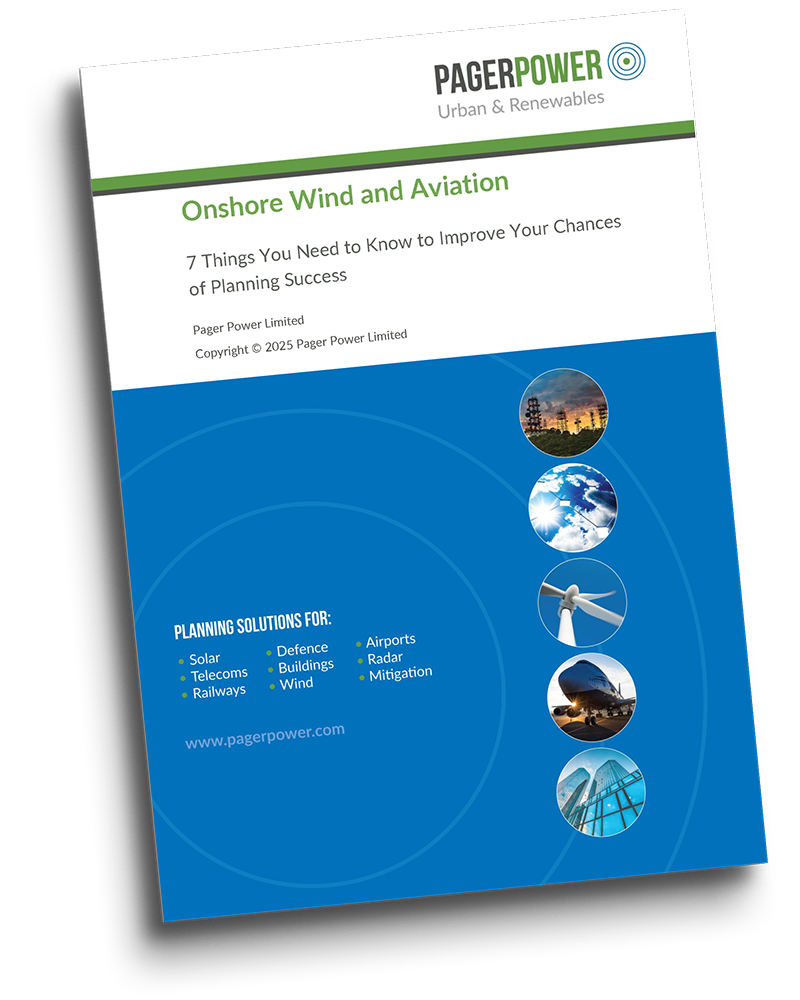
Free Guidance:
Onshore Wind & Aviation
7 things developers need to know
Understand the key aviation issues facing the future of onshore wind across the world.
Sign up for our industry newsletter and receive our Onshore Wind & Aviation guidance today. Just fill out the form below and we’ll send it directly to you.